Railway Station Code Search – Find Indian Railway Station Codes Easily
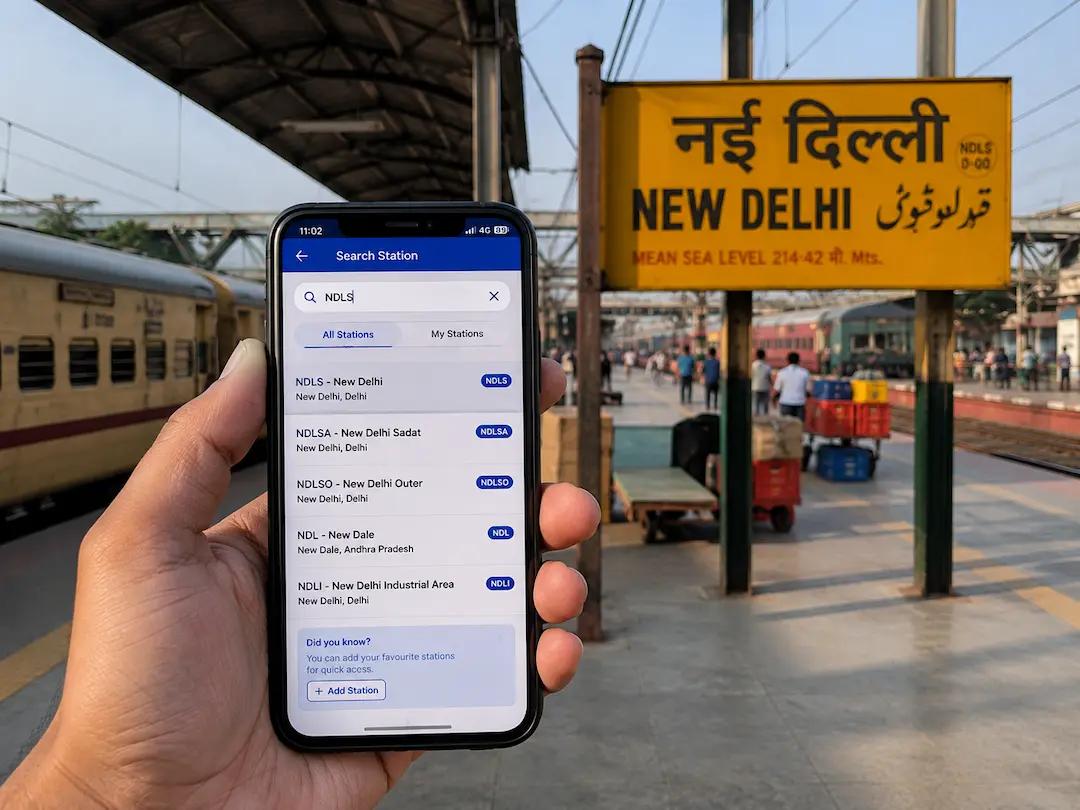
If you have ever typed a station name while booking a train ticket and seen two or three confusing results, you have already felt the problem that station codes solve. Every railway station in India has a unique short code assigned by Indian Railways. Knowing that code - or knowing how to find it quickly - removes one of the most common booking mistakes passengers make.
This guide covers what a station code is, why it matters, and the fastest ways to find the right one.
What is a Station Code?
A station code is a short alphanumeric identifier assigned by Indian Railways to every station on its network. It is usually two to five characters long. No two stations share the same code, which makes it the most reliable way to identify a specific station.
For example:
- New Delhi — NDLS
- Mumbai Central — BCT
- Chennai Central — MAS
- Howrah Junction — HWH
- Bengaluru City — SBC
When you book a ticket on RailOne, IRCTC, or any railway platform, the system uses the station code in the background to confirm your exact origin and destination. The station name is just for display. The code is what actually identifies the station in the railway database.
Why the Station Code Matters
Station names in India can be confusing. Many cities have multiple stations. Names that sound similar - or that belong to the same city - can lead passengers to select the wrong departure or arrival point.
A few common examples where the code prevents confusion:
- Mumbai has multiple major stations: Mumbai Central (BCT), Chhatrapati Shivaji Maharaj Terminus (CSMT), Bandra Terminus (BDTS), and Lokmanya Tilak Terminus (LTT). Same city, four very different stations.
- Delhi has New Delhi (NDLS), Old Delhi (DLI), Hazrat Nizamuddin (NZM), and Anand Vihar (ANVT). Picking the wrong one changes your entire journey.
- Bangalore has Bengaluru City (SBC) and Bengaluru Cantonment (BNC) - easy to mix up if you are searching by name alone.
When you confirm the station code before booking, you remove this ambiguity completely. The code is exact. The name is not always enough.
How to Find a Railway Station Code
There are several ways to do a railway station code search depending on where you are and what you have access to.
On MyStationQR Search your station by name on MyStationQR. Each station page displays the station code clearly alongside the QR code. This is useful when you want to confirm the code and access the station's booking page at the same time - no need to cross-reference multiple sources.
On the RailOne App Type the station name in the booking flow. RailOne shows results with the station code next to each name. Confirm the code matches what you expect before selecting.
On IRCTC The IRCTC booking form shows station codes alongside names in the search dropdown. This works well if you are booking reserved tickets.
On physical station boards Every Indian railway station displays its code on the station name board — the yellow board on the platform. If you are already at the station, look for the large board at the platform entrance.
On your ticket Any previously booked paper or e-ticket shows the origin and destination station codes clearly. If you have made the same journey before, your old ticket is a reliable reference.
Common Indian Railway Station Codes
Here are frequently searched station codes across India:
- NDLS — New Delhi
- BCT — Mumbai Central
- CSMT — Chhatrapati Shivaji Maharaj Terminus, Mumbai
- MAS — Chennai Central
- HWH — Howrah Junction, Kolkata
- SBC — Bengaluru City Junction
- PUNE — Pune Junction
- ADI — Ahmedabad Junction
- LKO — Lucknow Charbagh
- JP — Jaipur Junction
- HYB — Hyderabad Deccan
- SC — Secunderabad Junction
- PNBE — Patna Junction
- BBS — Bhubaneswar
- NZM — Hazrat Nizamuddin, Delhi
This list covers major junctions most passengers search for. For smaller or local stations, use MyStationQR or the RailOne app search to find the exact code.
Tips for Station Code Search
Search by code, not just name. If you already know the code, type it directly into the booking search. It gives one exact result instead of a long list of similar station names.
Confirm before you book, not after. Check the code on the booking screen before completing payment. Changing a wrong station after payment creates refund delays and extra steps.
Watch out for nearby stations with similar names. Junctions, cantonment stations, and suburban stations in the same city often have names that look similar. The code is the fastest way to tell them apart.
Save frequently used station codes. If you travel on the same route regularly, save your home station code somewhere easy to access — a phone note, a saved browser page, or a bookmarked MyStationQR station page. This saves time on every future booking.
Use the station QR code as a shortcut. Each station page on MyStationQR has a QR code that takes you directly to that station. Scanning it skips the manual search entirely and opens the correct station page in one step.
Final Thoughts
The railway station code is a small detail that prevents large mistakes. In a network as large as Indian Railways — with thousands of stations and many cities that share similar names — the code is the one reliable anchor that confirms you are booking the right journey.
Whether you are using RailOne for unreserved tickets or IRCTC for reserved travel, confirming the station code before you complete payment is one of the simplest habits that makes railway booking consistently smoother.
For fast, accurate station code search, MyStationQR keeps an updated directory of railway stations across India — each with the correct code and a direct QR code for quick access.